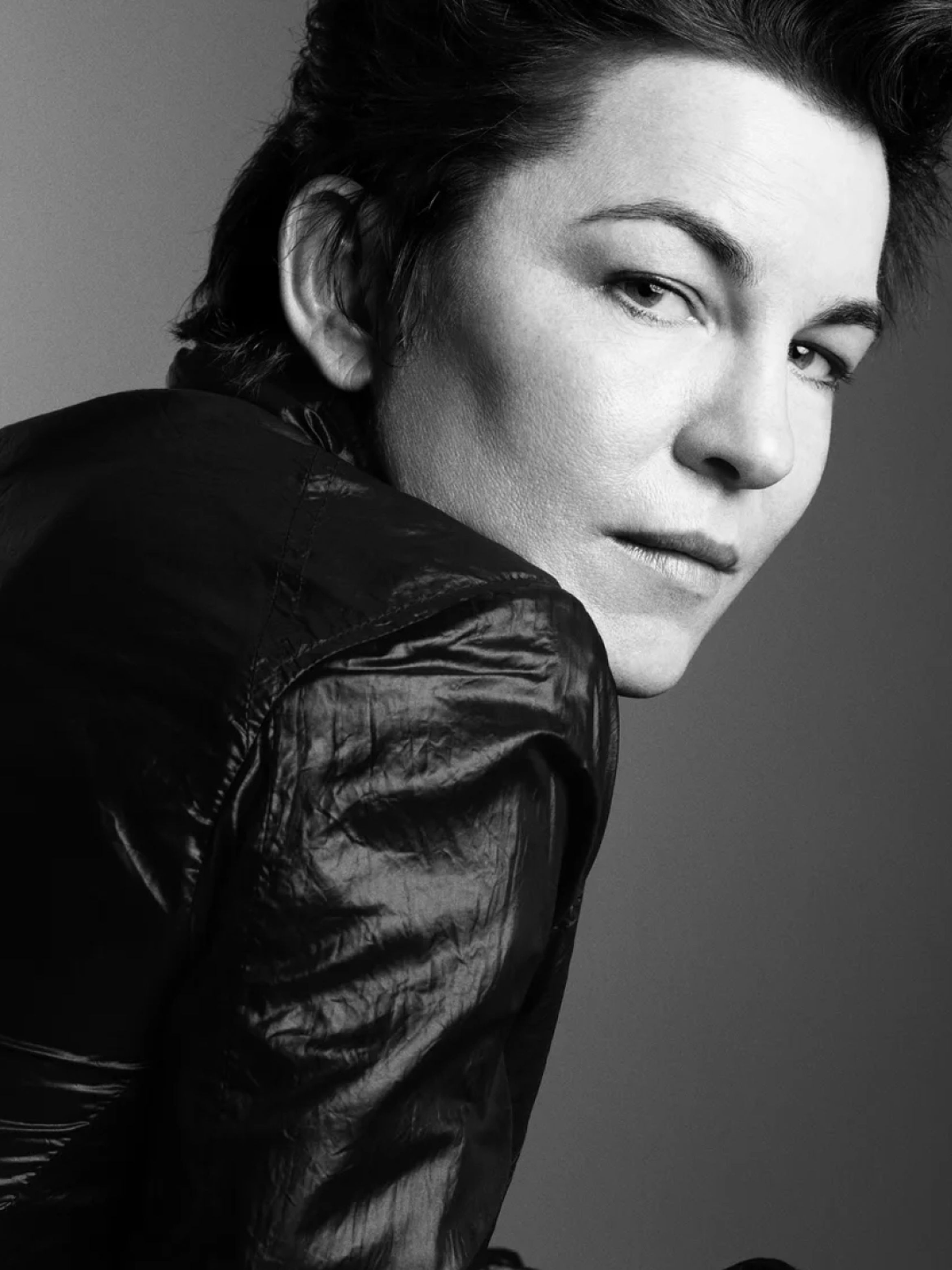
Bridget Riley

Discover the illusionary artworks of a trailblazing British painter.

2 min read

Mind-bending compositions of line and colour have made Bridget Riley one of the most famous living British artists.

“I just love structure. The argument of structure. And the emotional volume that it can present.” 

Bridget Riley

Born 1931 in London, Bridget evacuated to Cornwall with her mother, sister and aunt when World War II began. Her father was sent to fight. With no school to attend and stunning coastlines, “there was, in fact, nothing to do but look.”

Bridget moved back to London in the late 1940s to study at Goldsmiths and subsequently the Royal College of Art. She didn’t complete either diploma.

Instead, she taught herself new techniques through observation. By recreating the work of Pointillist painter Georges Seurat – who used densely-packed dots to build representational pictures – Bridget honed a systematic approach to colour and form. 

Georges Seurat, The Bridge at Courbevoie, 1886-7

Pink Landscape, 1960

In the 1960s Bridget’s name became synonymous with an emerging movement – Op Art.

Despite being executed in black, white and grey, the compositions created the illusion of many different colours — manipulating the process of perception.

The Kiss, 1961

A Movement in Squares, 1961

Later Bridget introduced new colours from across the spectrum, which she treated with the same mathematical attention to tone, line, depth and volume.

Rattle, 1973

To date, Bridget has made just one sculpture.

“I thought I would make a painting that enveloped you physically. That was a great mistake.”

Bridget immediately turned back to the flat expanse of her greatest love – the canvas. 

Throughout her seven-decade career, Bridget’s work has often been categorised as abstract. The label she aligns with most, however, is a simpler one. 

“I’m a painter first and foremost. That’s what I do."

Bridget sits within her Continuum sculpture, 1963

By contrast to the spontaneous mark-making of Abstract Expressionism, Bridget's compositions are built on systems. 

“You need something to do something with. You can’t explore without an agent.”

In a post-internet world the works take on new meanings. The repeated shapes appear digital, even algorithmic — yet each element is carefully hand painted. This juxtaposition elicits disarmingly emotional results.

Aurum, 1976

Streak, 1979

Equally recognisable on phone screens and museum walls, Bridget’s legacy is tremendous.

“I try to find out what I can look at — what can be seen. Through looking you can learn to see.”

Bridget’s dedication to truly seeing ensures that — in an ever-changing world — there will always be more to paint.

Vein, 1985

More in this series

Black and white photo of Tom of Finland
00:55
video

Tom of Finland

Tom of Finland's iconic drawing style is one of the most enduring influences on gay culture. As a young boy, he daydreamed about the farmers and labourers from his rural hometown in their leather boots and workwear. As an adult, he turned these fantasies into his legacy.

6 min read
Photograph of Carrie Mae Weems smiling
00:54
video

Carrie Mae Weems

American artist Carrie Mae Weems changed the game for image-making in contemporary art. Her intimate photos of family, friends and historical events have opened doors for the next generation of artists.

4 min read
Mickalene Thomas sits side on in a brown cushioned chair on an animal patterned carpet.
00:55
video

Mickalene Thomas

American artist Mickalene Thomas set out to change the face of art history back in the early 2000s – and that’s exactly what she’s done. We take a look at Mickalene’s humble beginnings and her artistic legacy as the contemporary art powerhouse she is today.

Black and white photo of Elizabeth Peyton
00:49
video

Elizabeth Peyton

Since the birth of art, humans have painted themselves. But what do portraits mean today? And how do they continue to capture precious moments of history?


Insightful?

Insightful?

Subscribe to the Avant Arte newsletter for the art world in your inbox.


Discover more insights

Printing Mickalene Thomas
article

Make-Ready: A new frontier in printmaking

Make-Ready is Avant Arte's specialist printmaking studio, based in London. Together, we collaborate with some of the biggest artists in contemporary art to realise their vision and push the boundaries of what's possible in print.

In the studio of Tomas Sanchez - detailed shot of the artist painting
interview

Interview with Tomás Sanchez

We caught up with Tomás to talk about Volumen Uno, his love for the Romantics, an acquisition by Fidel Castro and his takes on paradise, meditation and the internet.

9 min read
Bronze sculpture Maze Aurum by James Jean - detailed shot
interview

In Conversation: James Jean & Christian Luiten

Ahead of the upcoming launch of Maze Aurum Taiwanese-American artist James Jean speaks to Avant Arte co-founder, Christian Luiten, in a podcast-style Clubhouse conversation

abstract blue artwork by Anish Kapoor
article

Norman Rosenthal on Anish Kapoor

Norman Rosenthal, guiding force behind the artist's first silkscreen print, reflects on his relationship with artworks by Anish Kapoor – shiny, dirty and sublime – since they first crossed paths in 1978.

5 min read